 Most viewed - Ducati Most viewed - Ducati |

489 viewsA quick video tour of the installed harness. For easier viewing please go to http://www.youtube.com/watch?v=h8ePhGSbxso
|
|
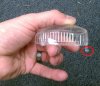
489 viewsThe red circled part shows why the lens needs to be angled out when removing it. That hook helps hold the lens in to the housing. The end opposite the hook is where the screw goes.
|
|
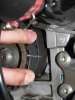
488 viewsWith the horizontal (front) cylinder belt removed I lined up my replacement belt for the vertical cylinder and marked it.
|
|
488 viewsMy test bracket front an center proved the load resistor worked in keeping the right LED turn signal from flashing fast when engine RPM went above 3000. JST 2-prong electrical terminals and 50W, 6-ohm resistors (one per bulb).
|
|

488 viewsThe right side mounted. Easy. It hides under the seat base and is away from the seat edge, thus touching nothing.
|
|

487 viewsHow it looks using a vice. The push rod is free to move as the socket is resting on the vice clamps.
|
|
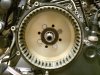
487 viewsNew basket placed within. Use 4 bolts, snugged in a star pattern, to seat the basket onto the hub.
|
|
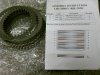
487 viewsThe new clutch pack and stacking instructions. No idea what the bottom image is for, I just used the top part.
|
|
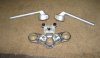
485 viewsJust a picture of the stock '06 clip-ons and the bottom side of the upper triple tree.
|
|
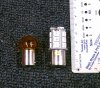
485 viewsSize comparison of the incandescent (left) bulb vs. the LED unit (right). Though the LED unit is taller it will still fit inside the signal housing with room to spare.
|
|

484 viewsThe clutch stack. See how the left edge of the friction plate teeth are worn and hammered.
|
|
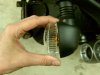
484 viewsPivot the outside of the clear lens a little and then gently pull the lens away from the housing.
|
|

...after.483 viewsThe bottom of the switch is at 36".
|
|
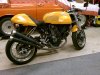
482 viewsAnd with mia ragazza herself.
|
|
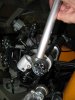
481 viewsOther side of the right bar showing another locating hole.
|
|
...after.481 views
|
|
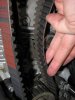
480 viewsBecause the teeth line up on the center pulley you can place the replacement belt right next to the old belt, lining up the belts tooth to tooth. No need for counting!
|
|
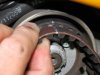
479 viewsAt the top pulley you mark the replacement belt perfectly with the mark on the old belt. You can now remove the vertical belt and quickly replace it with the new belt, followed by the horizontal belt. Adjust the belt tension and then go ride!
|
|
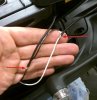
479 viewsI made a pigtail bridge, effectively just lengthening the distance between the original electrical plugs. This allows me to put the resistor into the circuit, in parallel. This tricks the ECU into thinking it's running incandescent bulbs & thus keeps it from rapidly flashing (bulb-out warning). I was successful on the right side with using blue splice/snap-lock connectors. The left side it wasn't working so I ended up soldering the resistor leads directly to the bridging wires. Perfect. In hind-sight I should've done this to the right side...oh well, some other day. Coated with liquid electrical tape & then wrapped in real tape.
|
|
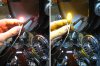
In the raw comparison476 viewsComparison of the two bulbs. On the left is the standard incandescent and on the right is the LED unit.
|
|
| 428 files on 22 page(s) |
 |
16 | |
|





