 Last additions - How-to Last additions - How-to |
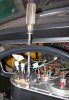
550 viewsI used a 7/16" socket -- none of my standard metric sockets fit! -- to carefully snug down the VR. I used the stock sheet metal screw from the original vibrator to secure the VR down. I also put a stainless steel split washer under the head of the screw to help lock the screw in place. Just in case...Jan 09, 2010
|
|
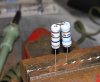
505 views...then soldered them together, trimmed off the extra wire, and carefully bent it back on itself.Jan 09, 2010
|
|
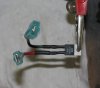
554 viewsWhat I did was take a short piece of wire and solder it to the pin on the VR and then shrink-wrapped it to keep it insulated. I then crimped a spade connector at the end of the wire. I have a quality (a.k.a. expensive) wire crimper so I know my crimps are good and will last. The right pin (red wire) of the VR connects to the right spade/tab on the fuel gauge. The left pin (black wire) is what gets the +12 volts. Note the spade connetors are being used -- the red wire has a female spade connector and connects to the fuel gauge while the black wire has a male spade connector and is connected to the +12 volt black wire from the gauge cluster.Jan 09, 2010
|
|
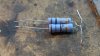
546 views(continued) The resistors came as a two-pack and were $1.25 each ($3.50 total for 4 resistors).
My "resistor pack". I wrapped the wires together so they will be in series...Jan 09, 2010
|
|
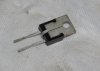
478 viewsHere's the VR. The center pin is a ground and the easiest way to ground it is to CAREFULLY bend it back onto the backside of the VR body. It will then be pressed against the gauge cluster body that is grounded. The pins are delicate and if you bend them too much they will break!Jan 09, 2010
|
|
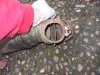
480 viewsHere the flapper is opened all of the way so all of the heated air goes into the Bus interior. This system is used by all the Types of engines (Type I/II, III, & IV).Nov 30, 2008
|
|
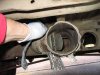
480 viewsFlap fully open, allowing some of the heated air to divert into the center of the Bus for the rear passengers.Nov 30, 2008
|
|
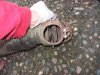
493 viewsThis is the flapper opened 1/2-way. So some heated air will enter the cabin and some will exit to the atmosphere.Nov 30, 2008
|
|
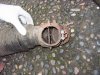
506 viewsHere is the flapper box that sits above the heat exchangers. This is the closed position so all air exits out the "bell" (right-most part of the flapper box) and into the atmosphere. Air is always flowing through the heat exchangers -- it just goes into the interior or vents to the outside.Nov 30, 2008
|
|
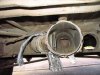
617 viewsLooking forward, this is the point where the main heater duct connects to the forward 'Y' where some heat can be diverted to the interior floor vent that is between the driver/passenger seats that points into the center of the Bus. Here the flap is closed so all heated air goes to the front of the Bus.Nov 30, 2008
|
|
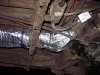
538 viewsView of the Y-section taken from the left side.Nov 05, 2008
|
|
500 viewsNov 05, 2008
|
|
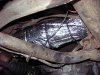
543 viewsThe right side fully wrapped with no problem. By the way, I'd recommend disconnecting the battery when working on the Y-section and back (like this part) as the insulation can conduct electricity and there is the starter chillin' out there, with it's +12v constant supply just waiting for some action ;-)Nov 05, 2008
|
|

426 viewsLeft heat exchanger accordion duct, looking forward. For some reason, the diameter was more than 16" so the wrap didn't fully cover it.Nov 05, 2008
|
|
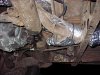
516 viewsI wasn't able to fully wrap this piece. It was a real pain to get the insulation on top of it. Since it is already insulated from the factory I didn't worry much about cutting up some insulation and wrapping the bottom. Maybe at a later date. Notice that I did put an 18" sheet across the top of the heat exchanger ducts that go over the torsion housing. What a pain in the neck! Trying to wrap this section wasn't worth it, with the tubes, guides, wires, and shifter parts all in the way -- very busy area!Nov 05, 2008
|
|
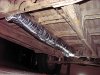
561 viewsLooking forward at the center section. I clipped off the stock duct zip-ties, wrapped the duct, and then zip-tied the duct back to the mounting points.Nov 05, 2008
|
|
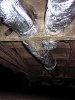
544 viewsThis is a view -- looking to the front of the Bus -- of the dreaded "Y" section where the heat exchanger ducts merge to the center tunnel duct.Nov 05, 2008
|
|
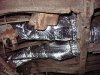
554 viewsSame duct, just took the picture from the left side of the Bus. Wrapping this duct is likely the most difficult of all the ducts so go slow and think. I know the pictures aren't a huge help but they give an idea. I'm sure there's more than one way to insulate this loop.Nov 05, 2008
|
|
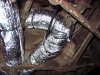
618 viewsI put a scrap piece of insulation (that I removed from the corner) under the split-loom to fully cover the duct.Nov 05, 2008
|
|
487 viewsNov 05, 2008
|
|
| 334 files on 17 page(s) |
 |
11 | |
|





