 Most viewed - How-to Most viewed - How-to |
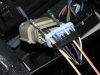
534 viewsFeed your pigtail wires in, white with yellow stripe on the left in the #16 hole and the white with orange stripe on the right in the #11 hole. The numbers are on the outside of the black plug.
|
|
Night example.531 viewsNight time example of turn signals. Also on YouTube.com at http://www.youtube.com/watch?v=uAUECRUXoQo&list=UUhzs41pIUb_YugBfXOWUwvw&index=3&feature=plcp
|
|
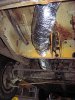
526 views...but now it is!
|
|
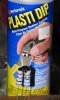
523 viewsI used "Plasti Dip" over the joint as it's an electrical insulator and will protect the joint. It's thick and simply paints on.
|
|

522 viewsNew fog-light equipped light switch. To operate simply push the dial in. Of course, you have to go to the *&$%! dealership to get it 'enabled'! Fogs automatically turn off when high beams are turned on, however, they remain on when using the "flash to pass" feature. Also, the 'system' remembers the position of the fogs so if you leave them on when you turn off the lights, they will automatically come back on when you turn the lights back on, including if you turn off the car.
|
|
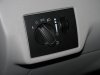
520 viewsStock, non-fog light switch.
|
|
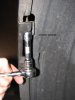
Mounting the LED array.520 viewsRemove the bolt that holds the bumper skin to the upper quarter panel (left side shown). It is above the two wheel well screws.
|
|
517 views
|
|
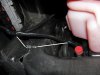
517 viewsWhere I zip-tied the left side of the harness. It comes down near the radiator over-flow container (the pink bottle). Don't use the aluminum object to the left, that's the heat-sink for the coils!
|
|

Reference: Rear gear box, front side.517 viewsFront side of rear gear box. Steel roll pin is 3/16" x 1-1/4". This is where the drive shaft fits.
|
|

515 viewsIndexes all lined up. Ready for the case halves to be mated now.
|
|
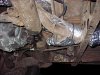
514 viewsI wasn't able to fully wrap this piece. It was a real pain to get the insulation on top of it. Since it is already insulated from the factory I didn't worry much about cutting up some insulation and wrapping the bottom. Maybe at a later date. Notice that I did put an 18" sheet across the top of the heat exchanger ducts that go over the torsion housing. What a pain in the neck! Trying to wrap this section wasn't worth it, with the tubes, guides, wires, and shifter parts all in the way -- very busy area!
|
|
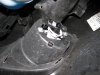
514 viewsRight fog bolted in.
|
|
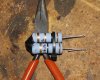
511 viewsI used a small zip-tie to keep the resistors together while working on them. Not critical to have but makes the pack more sturdy and easier to handle. You can also see that I bent the wires back on themselves, essentially making them thicker. This allowed me to crimp spade connectors to them...
|
|
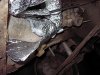
510 viewsThis picture and the next show that the corner is cut and folded onto itself. It's best to have over-lapping than a gap in the insulation.
|
|

509 viewsThe repaired pin in place. Thin plastic washer goes between the gear (front and rear gears) and the case.
|
|
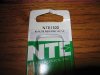
507 viewsHere's the VR (voltage regulator) information. This is what you need. I got mine for $3.15 at Norvac Electronics, Inc. You can also get it at Fry's. NTE1932, IC voltage regulator, positive 10-volts, 1-amp.
|
|
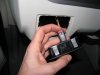
507 viewsNew light switch plugged in. See the red tab? It's in the 'unlocked' position...
|
|
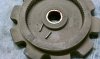
506 viewsAll the bearings are roller bearings and they are held in with the grease. When cleaning the grease and wiping the bearings they will most likely fall out so work over a soft, plush towel to keep them from bouncing away. Pack the bearings and cage surfaces with fresh grease and slip any fallen bearings back in. You should see no gaps between the bearings. Pack more grease in when they're all in and roll them around with your finger to spread the fresh grease around. It will hold them in there.
|
|
505 views
|
|
| 334 files on 17 page(s) |
 |
7 | |
|





